

What Happens Before Surgery? Understanding the Role of an Operation Theatre
There’s a certain kind of nervousness that hits when a doctor says the word “surgery.” Even if it’s minor, even if you know it’s routine, your mind still races — what happens in there, who’s around you, what if something goes wrong, will it hurt. And honestly, most patients walk into an operation theatre for the first time without really knowing what’s actually happening around them, because nobody sits down and explains it in plain words.
So let’s do that here. Let’s talk about what actually goes on before, during, and around a surgery — and along the way, why having a properly equipped Operation Theatre in Ateli Mandi matters more than people usually realise until they actually need one.
First, what exactly is an operation theatre?
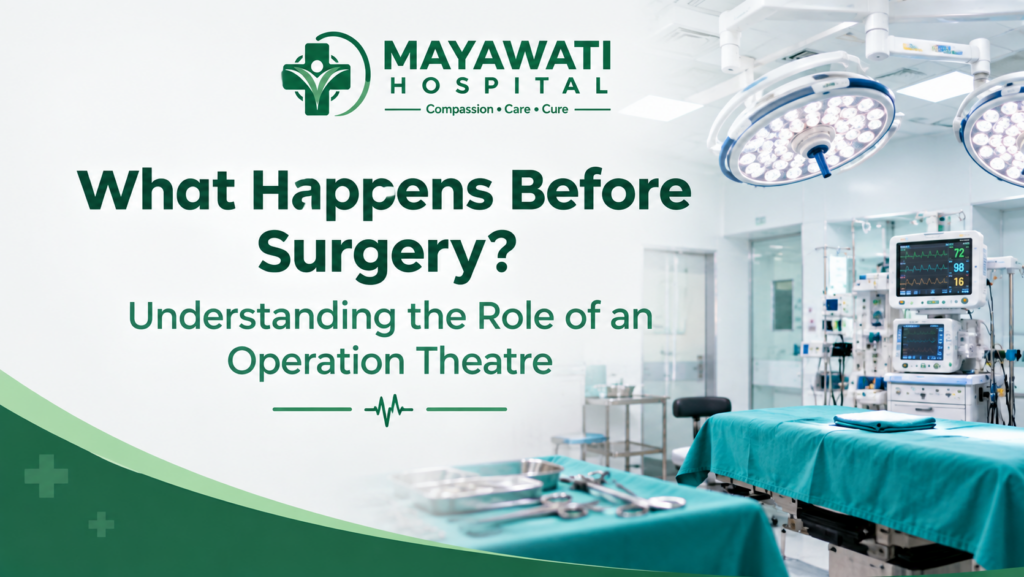
At its simplest, an operation theatre — most people just call it OT — is a specially designed room built for one purpose: to perform surgery in the safest, cleanest environment possible. It’s not just a room with a bed and some tools. Everything about it, from the air filtration to the lighting to the way surfaces are cleaned, is designed to reduce the risk of infection and give the surgical team everything they need without delay.
If you’ve ever wondered why you’re not allowed to wear jewellery, why everyone’s covered head to toe in scrubs, or why the room feels colder than the rest of the hospital — all of that has a reason, and it all comes back to keeping the environment as sterile as possible.
What Happens Before Surgery? Understanding the Role of an Operation Theatre
What happens before you’re actually taken in
This is usually the part that makes people the most anxious, simply because so much of it is unfamiliar. But once you know what to expect, it feels far less intimidating.
It usually starts with pre-operative checks — blood tests, sometimes an ECG or X-ray, just to make sure you’re fit for the surgery and there’s nothing that needs to be addressed first. Then comes the fasting instruction, which is something almost everyone’s heard about — typically no food or water for several hours before, so the stomach is empty and there’s no risk of complications during anesthesia.
You’ll likely meet the anesthetist before the surgery too, not just the surgeon. They’ll ask about allergies, past reactions to anesthesia, and any medications you’re on. This isn’t just a formality — it genuinely shapes how they manage you during the procedure.
Right before you’re taken into the OT, you’ll usually change into a hospital gown, remove jewellery and any metal objects, and a nurse or attendant will confirm your details — name, the procedure being done, sometimes even marking the correct side of the body if that’s relevant. It can feel repetitive, being asked the same questions multiple times, but that repetition is intentional. It’s one of the simplest ways hospitals prevent mistakes.
Inside the operation theatre
Once you’re inside, you’ll notice it’s a team, not just one doctor working alone. There’s the surgeon, of course, but also the anesthetist, nurses, and often an assistant surgeon or technician — each with a specific role. The anesthetist manages your comfort and vitals throughout, monitoring your heart rate, oxygen, and blood pressure constantly, while the surgical team focuses entirely on the procedure itself.
Everything in that room, every instrument, every surface, has already gone through a strict sterilization process before you even entered. That’s not something patients usually see, but it’s a huge part of what keeps a surgery safe.
Why the setup of the OT matters so much
People don’t always think about this, but the quality of an operation theatre genuinely affects surgical outcomes. Proper air filtration reduces infection risk. Modern equipment allows for more precise, often less invasive procedures. And a well-organised team, working in a space built specifically for surgery, reduces the chances of complications significantly compared to a rushed or improvised setup.
This is really why access to a well-equipped Operation Theatre in Ateli Mandi has made such a difference for local patients. Instead of travelling to a distant city for procedures that can be safely done nearby, people now have access to proper surgical facilities close to home — which matters not just for planned surgeries, but especially in situations where timing genuinely can’t wait.
What happens right after
Once the surgery is done, you’re usually moved to a recovery area where the anesthetist and nursing staff keep a close eye on you as the anesthesia wears off. This is a normal part of the process, even if it feels a little disorienting waking up. Once you’re stable, you’re either shifted to a regular ward or, in more complex cases, monitored more closely for a short period before that.
A few things that genuinely help before surgery
Ask questions freely — a good surgical team expects it and would rather you understand than sit anxious and silent. Follow fasting and medication instructions exactly as given, since these small details actually matter for your safety. And try to have someone with you, even if it’s just for moral support before you’re taken in — that familiar presence tends to make the whole thing feel far less clinical and cold.
Final thoughts
An operation theatre can feel like an intimidating, unfamiliar space, but really, it exists for one very focused reason — to give patients the safest possible environment for a procedure that needs precision and care. Once you understand what’s actually happening around you, a lot of that fear tends to settle into something much calmer.
And when a surgery does need to happen, having access to a reliable Operation Theatre in Ateli Mandi close to home means one less thing to worry about — proper care, without the added stress of travelling far from family at a time when being close to them matters most.
If you’re currently preparing for a surgery, please rely on your surgeon and hospital’s specific instructions over general information like this — every case has its own details that matter.