

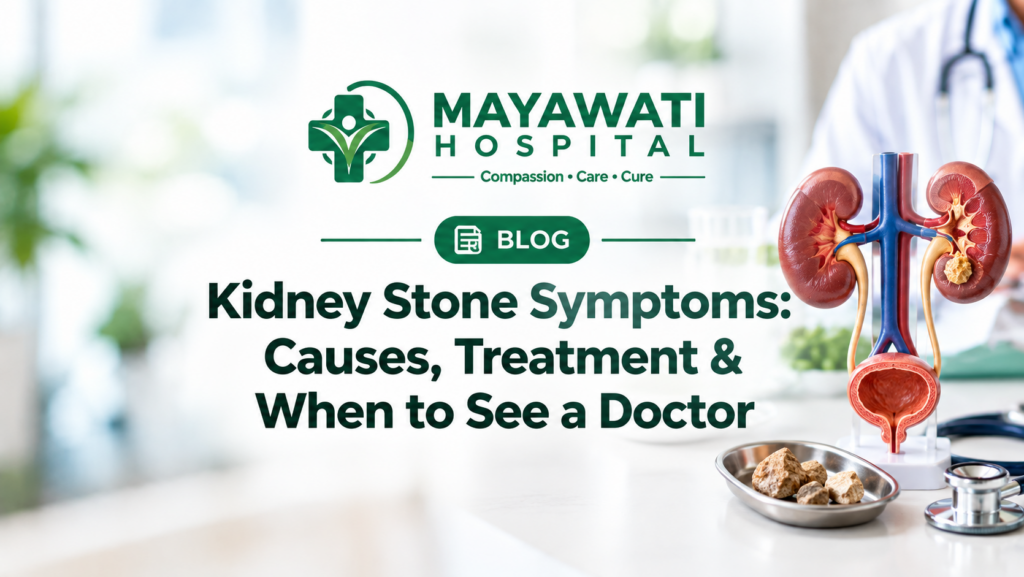
Kidney stones can lead to excruciating pain, discomfort while urinating, and a range of other urinary issues. Some people can even form small kidney stones without noticing any symptoms at all while others find themselves experiencing sudden pain as the stone passes through their urinary tract. Knowing when to see a doctor about your symptoms can help avoid other dangerous complications.
If you are experiencing pain in your back or side or observe blood in your urine or have difficulty urinating, you should contact a doctor. Understanding kidney stone symptoms and causes may be helpful if you are seeking kidney stone treatment in Ateli Mandi.
What Are Kidney Stones
Kidney stones are hard mineral deposits that form anywhere in your kidney. They occur when there is a concentration of minerals and salts in your urine.
Kidney stones can vary from tiny to large in size. These stones that are small in size can pass through your urinary tract while those that are large need to be broken up or removed by a doctor. The treatment for kidney stones depends on the size and location of your stones, the type of kidney stone you have, and your general well-being.
Common Kidney Stone Symptoms
There is a wide variety of kidney stone symptoms that can arise depending on a person’s condition. Usually, symptoms begin only when a kidney stone is already in your ureter – the narrow tube that connects your kidneys to your bladder.
1. Severe Pain in Your Back or Side
The most common kidney stone symptom is sudden bouts of severe pain in the back or side, usually just below the ribs. This pain can be sharp and radiate towards the lower abdomen or the groin area. You may even experience waves of pain that begin and end at different times.
2. Painful or Burning Feeling While Urinating
A kidney stone located near your bladder can cause discomfort or burning while you are urinating. A burning sensation or pain while urinating can also be caused by a urinary tract infection.
3. Blood in Your Urine
A kidney stone can cause irritation to your urinary tract, resulting in blood in your urine. Your urine may seem pink, crimson, or brown. In some cases, blood in the urine can only be observed in a urine test.
If you see blood in your urine, it is vital you get it checked out by a doctor even if you are not experiencing pain.
4. Frequent Urination
You may find yourself needing to pee more frequently than usual, especially if a stone has moved close to your bladder. You may also experience a sudden need to urinate.
5. Nausea and Vomiting
Nausea and vomiting can be triggered by severe kidney pain. It may also prevent you from rehydrating your body which can lead to other issues like dehydration.
6. Unusual Urine Odor or Color
Unusual odor and color of your urine can indicate an infection or another condition. If you are observing these symptoms in addition to some of the other kidney stone symptoms, you should speak to a doctor.
What Causes Kidney Stones?
The cause of kidney stones depends on different factors. Here are some kidney stone causes that many people can relate to:
1. Not drinking enough water
2. Too much salt in your diet
3. Family history of kidney stones
4. Having kidney stones in the past
5. Having a digestive system disease or other health issue that can promote stone growth
6. Medications or supplements that you or your family members are taking
It is important to speak to a doctor about kidney stone causes and risks if you are experiencing recurring kidney stones or have a family history of kidney stones.
When Should You See a Doctor for Kidney Stones
Speak to a doctor if you are experiencing recurring side or back pains or if you have blood in your urine or painful urination.
Immediately contact a medical professional if you are experiencing any of the severe kidney stone symptoms listed below:
1. Severe pain
2. Fever and chills, especially if you suspect you have a kidney infection or infection in any other part of your urinary tract
3. Inability to urinate or issues with your usual flow of urine
4. Inability to retain food or liquids or vomiting
If your kidney stone blocks the flow of your urine and causes infection, it can be potentially life-threatening. Therefore, it is important to get the required treatment if you are experiencing kidney stone symptoms.
How Do Doctors Diagnose Kidney Stones
Your doctor will be able to provide kidney stone treatment in Ateli Mandi based on your symptoms, medical history, and test results. The following diagnostic procedures can also be used to help confirm a kidney stone diagnosis:
Urine Test
A urine test can help identify infection, blood in your urine, and other risk factors for kidney stones.
Blood Test
This test helps evaluate how well your kidneys are functioning and if there are any abnormal levels of minerals in your body.
Ultrasound or Ct Scan
An ultrasound can help detect most kidney stones as well as any obstruction in the flow of your urine. A ct scan may be suggested if the doctor needs to get a better view of your kidney stone.
Your doctor will advise you on which kidney stone tests you should take.
Kidney Stone Treatment in Ateli Mandi
Kidney stone treatment options depend on the severity of your condition as well as the size and location of your stones. Your treatment can also depend on whether the stone is causing a blockage or infection.
1. Passing a Small Stone Naturally
Some kidney stones, especially those that are small in size, can pass naturally on their own. Your doctor can prescribe you pain relievers and recommend that you take plenty of fluids to pass the stone. In some cases, they can prescribe you drugs to help you pass the stone.
Avoid taking too much water when you are experiencing severe pain or a suspected obstruction as this can bring about other complications.
2. Medicines
Drugs can be used to help you treat nausea, pain, or other uncomfortable symptoms. Some medications can also help you pass a kidney stone. It is important not to take any antibiotic or other medication without a doctor’s advice.
3. Procedures To Treat or Remove Stones
Procedures to help remove or break up stones can be recommended if you have large kidney stones, if your symptoms are affecting your daily life, or if the stones aren’t passing on their own. There are various options for treating kidney stones, including shock-wave lithotripsy and others.
A procedure may be needed in some cases to drain your kidney. This can assist in treating the infection and removing the obstruction. If your kidney is infected and blocked, you may need to be hospitalized for additional therapy
If you are looking for kidney stone treatment in Ateli Mandi, you can contact Mayawati Hospital to set up a consultation and discover the most appropriate options for your condition. Your doctor can evaluate your symptoms and recommend kidney stone treatment in Ateli Mandi if they suspect you have kidney stones.
How Can You Help Prevent Kidney Stones?
You can lower the risk of developing kidney stones by making certain lifestyle modifications. You can also take certain drugs to lower the chances that you will develop another kidney stone.
Here are some useful kidney stone prevention tips:
- 1. Drinking enough water to stay well-hydrated
- 2. Limiting your salt consumption
- 3. Eating a healthy diet that contains the right quantities of all food groups
- 4. Avoiding the use of any mineral or vitamin supplements that have not been approved by a doctor
- 5. Following special dietary recommendations if you are at risk for developing kidney stones
- 6. Scheduling regular checkups with your doctor if you have a history of kidney stones
Make sure you speak to your doctor about which dietary adjustments you should make. Do not cut out foods that contain calcium from your diet unless your doctor tells you to do so.
FAQs
1. What are the first signs of kidney stones?
Some of the first kidney stone symptoms that you may observe are pain in the side or back, blood in the urine, discomfort while urinating, or frequent urge to urinate.
2. Can kidney stones pass naturally?
Yes, some small kidney stones can pass naturally on their own. However, it is best to speak to a doctor to discover the best kidney stone treatment in Ateli Mandi.
3. Do all kidney stones need surgery?
There are various treatment options for kidney stones, depending on the size and location of the stones. Some kidney stones, especially small ones, may not require surgery.
4. What test shows kidney stones?
Based on the severity of your symptoms and condition, a doctor can advise you on which kidney stone tests you should take to confirm a diagnosis.
5. Where can I find kidney stone treatment in Ateli Mandi?
You can contact Mayawati Hospital to schedule a kidney stone consultation and discover the best kidney stone treatment in Ateli Mandi.
Consult Mayawati Hospital for Kidney Stone Concerns
Kidney stones can be incredibly painful. However, speaking to a doctor can help you understand the most suitable kidney stone treatment in Ateli Mandi. The most crucial thing you can do is to not ignore pain, discomfort, or other kidney stone symptoms. It is always best to contact a medical professional if you are observing recurring kidney stone symptoms or if you experience extreme pain, burning while urinating, or fever.
Looking for kidney stone treatment in Ateli Mandi?
You can contact Mayawati Hospital, Ateli Mandi, Haryana to set up a kidney stone consultation.
Phone: 086075 01730
Address: Ateli Mandi Road, Ateli Mandi, Haryana 123021
Availability: Contact the hospital to schedule your appointment.