

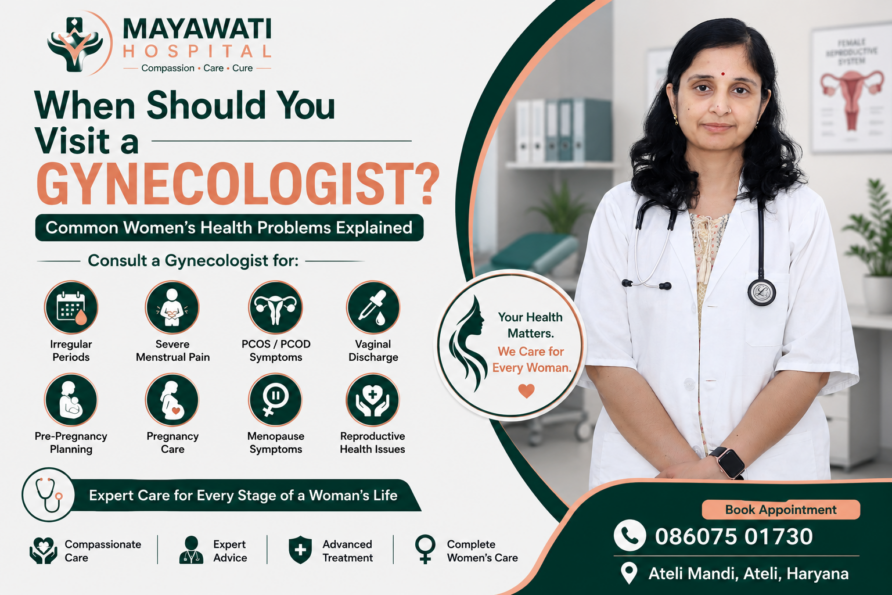
When Should You Visit a Gynecologist? Common Women’s Health Problems Explained
Many women delay going to the gynecologist until the problem becomes unbearable. A woman’s gynecologic care is not limited to pregnancy or reproduction — it is an important aspect of your health from your teens to menopause and beyond. Knowing when to get medical help and what conditions are frequent, may assist you to spot issues in the early stages and receive appropriate treatment.
This guide covers some of the most important indications, symptoms, and ages at which you should see a gynecologist at Ateli Mandi.
Why it is important to have regular gynecological exams.
A gynecologist treats the female reproductive system, including menstrual health, fertility, pregnancy, menopause and cancer screening. Routine exams do not have to be performed only when a child is not feeling well but are preventive care that can help detect problems earlier.
Most doctors say it’s a good idea to have an examination every year starting around the age of 13 or 15, or once you become sexually active. From then on, annual exams (or as recommended by your healthcare provider) will keep a record of your reproductive health over time.
When to See a Gynecologist?
While this is by no means a complete list, here are the important appointments.
1. Any period that is irregular or causes pain.
Irregular periods from time to time is normal, if there is regular irregularity then it’s worth looking into:
. Bleeding that is heavier, longer or more frequent than normal.
. Periods that haven’t happened due to pregnancy.
. Extreme cramping that interferes with functioning.
. Spotting between periods
They might indicate a hormonal imbalance, fibroids, polycystic ovary syndrome (PCOS) or thyroid problems.
2. Abnormal Discharge or Smell from the Vagina
Change in colour, consistency , smell . when itching or burning – can indicate an infection like bacterial vaginosis, a yeast infection or a sexually transmitted infection (STI).
3. Pelvic Pain
If the pain in the pelvis does not go away or gets worse, it should not be dismissed. It may be related to ovarian cysts, endometriosis, pelvic inflammatory disease or fibroids and a gynecologist may be able to determine the cause.
4. Trouble Conceiving
A gynecologist can assess fertility problems and determine the next steps if you have tried to conceive for more than a year (or six months if you are over 35 years old) and you are unsuccessful.
5. Menopause Symptoms
When hot flashes, night sweats, mood swings and irregular periods occur around the age of 40 or 50, it’s time to co-ordinate your menopause-related care to Mayawati Hospital help control your symptoms and monitor your bone and heart health.
6. Routine Screenings
Regular checkups, even if you don’t have any symptoms, help doctors detect cancer early by doing Pap tests, HPV testing, breast exams, and reproductive health exams.
7. The planning or confirmation of pregnancy
All of the pieces from the beginning, pregnancy guidance and testing from a gynecologist, from planning of pregnancy to thinking you might be pregnant.
8. Urinary Issues
If you have a gynecological problem, you may experience frequent urination or burn or may no longer be able to urinate at all, so you should have this evaluated too.
Common Women’s Health Problems
1. Polycystic Ovary Syndrome (PCOS)
A hormonal imbalance that leads to irregular periods, weight gain and fertility problems. It can be controlled through lifestyle changes and medication.
2. Endometriosis
Uterine-like tissue that develops outside of the uterus, resulting in pain and possible fertility problems.
3. Fibroids
Uterine fibroids that may result in abundant menstrual bleeding, and may lead to a feeling of pressure in the pelvis.
4. Urinary Tract Infections (UTIs)
UTIs are recurring, but common and treatable.
5. Menopause-Related Changes
Hormonal changes that create physical and emotional symptoms that need individualized treatment.
It is important to find the right care
When you’re picking a gynecologist, it’s important to find someone who’s experienced and approachable so you can talk sensitive health issues. A reliable gynecologist in Ateli Mandi, looking for a doctor at Mayawati hospital who not only understands your needs but also provides a comfortable and non-judgmental atmosphere for women of all ages.
Final Thoughts
Reproductive health is a important component in your wellbeing. Avoid letting a problem get serious , regular checkups and early action on unusual symptoms can help avoid problems and give you peace of mind. From regular check-ups to any particular concern, it is essential to see a qualified gynecologist at some point.